XR Moves Toward Mass Production, Testing Becomes a Key Link
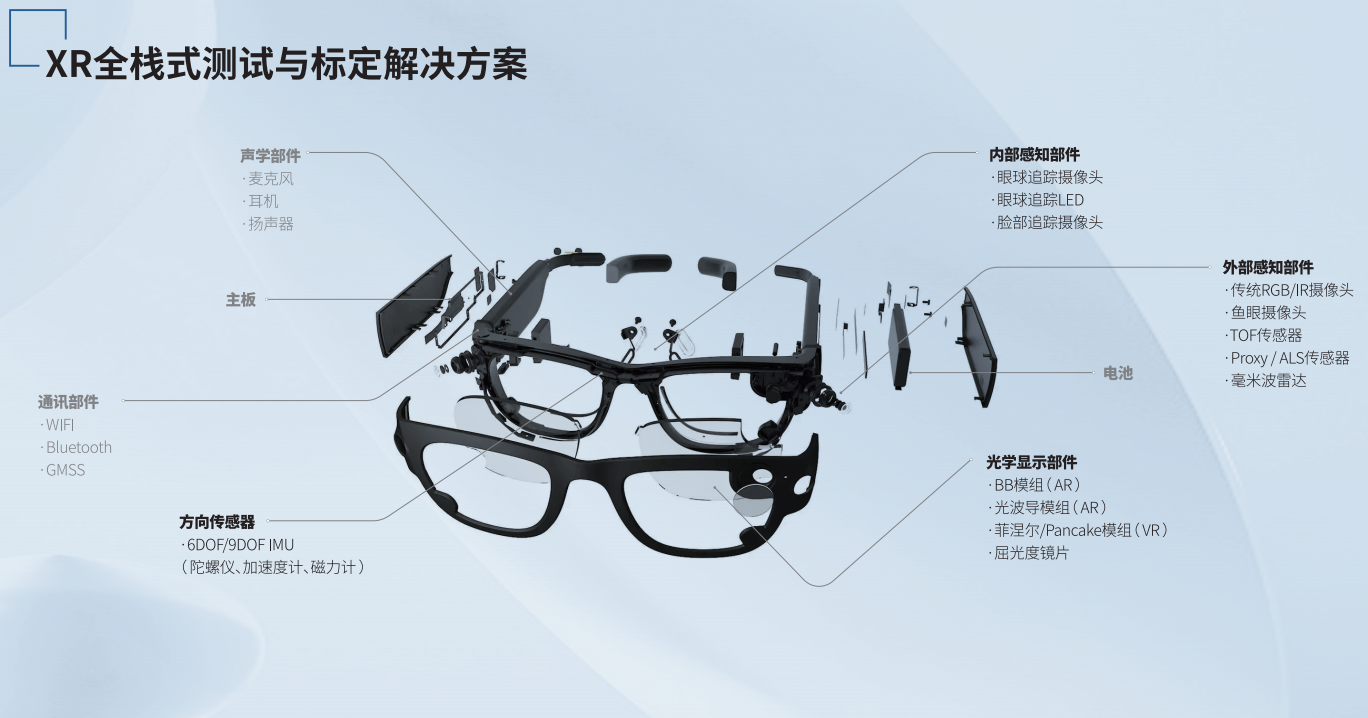
The final imaging quality of XR is not determined by a single component. It is jointly affected by multiple stages. These include microdisplays, optical engines, optical waveguides, optical modules, binocular alignment and assembly, and complete device calibration.
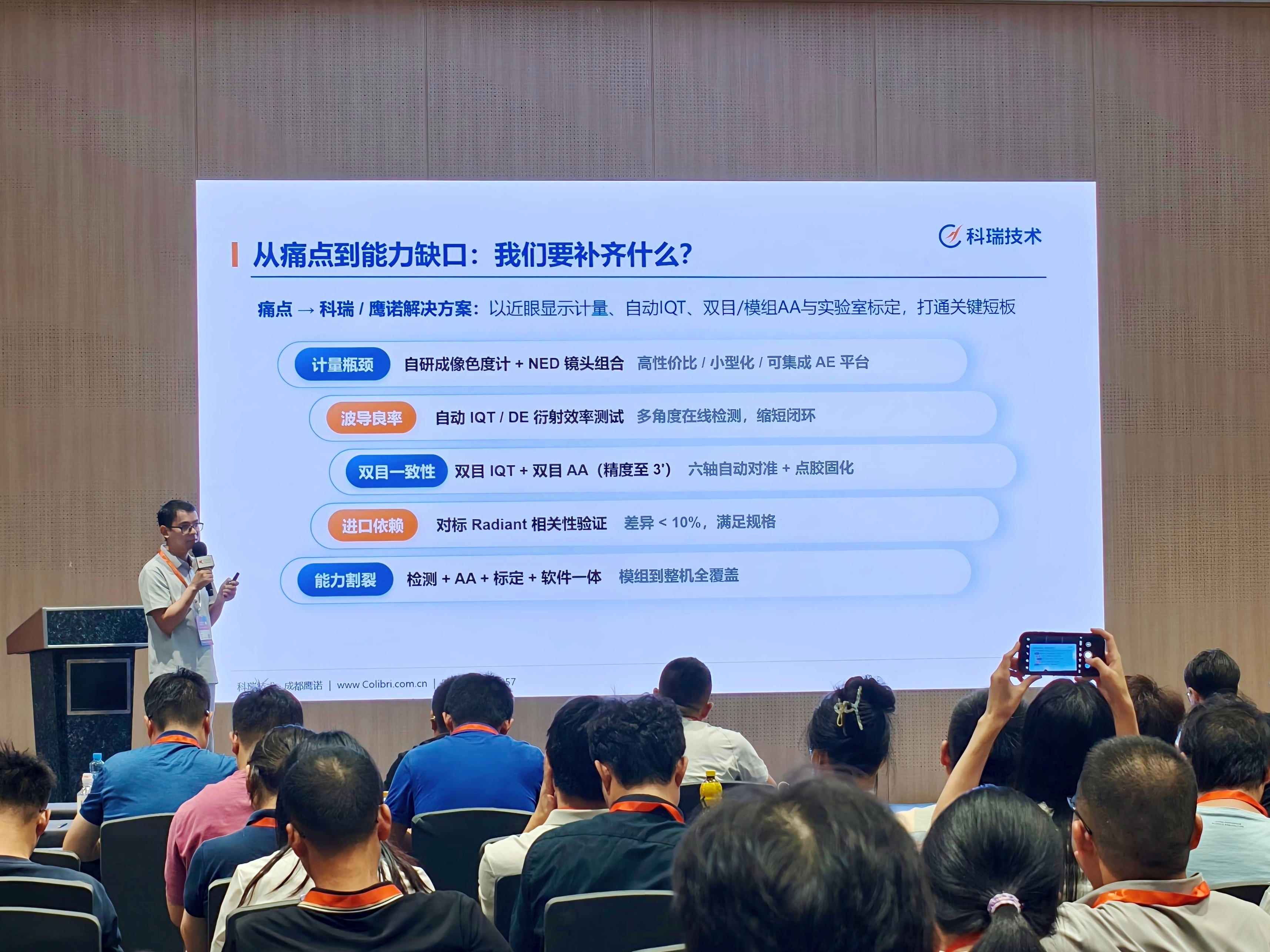
As the industry enters mass production, several issues have gradually become key bottlenecks in manufacturing. These include optical waveguide yield, optical engine/waveguide AA, binocular consistency, and near-eye metrology throughput.
Therefore, XR testing is evolving from traditional R&D validation and final product sampling. It is moving toward in-line inspection, process control, and quality closed loops throughout the manufacturing process.
Build Mass Production Testing Capabilities with Near-Eye Display Testing at the Core
Near-eye display (NED) testing is a critical step in evaluating the final visual experience of XR.
For AR optical modules and complete devices, comprehensive evaluation can be conducted around key indicators. These include brightness, chromaticity, MTF, distortion, contrast, ghosting/double images, Eyebox, and display defects.
However, mass production testing must not only be accurate. It must also balance repeatability, test takt time, and automation integration capability.
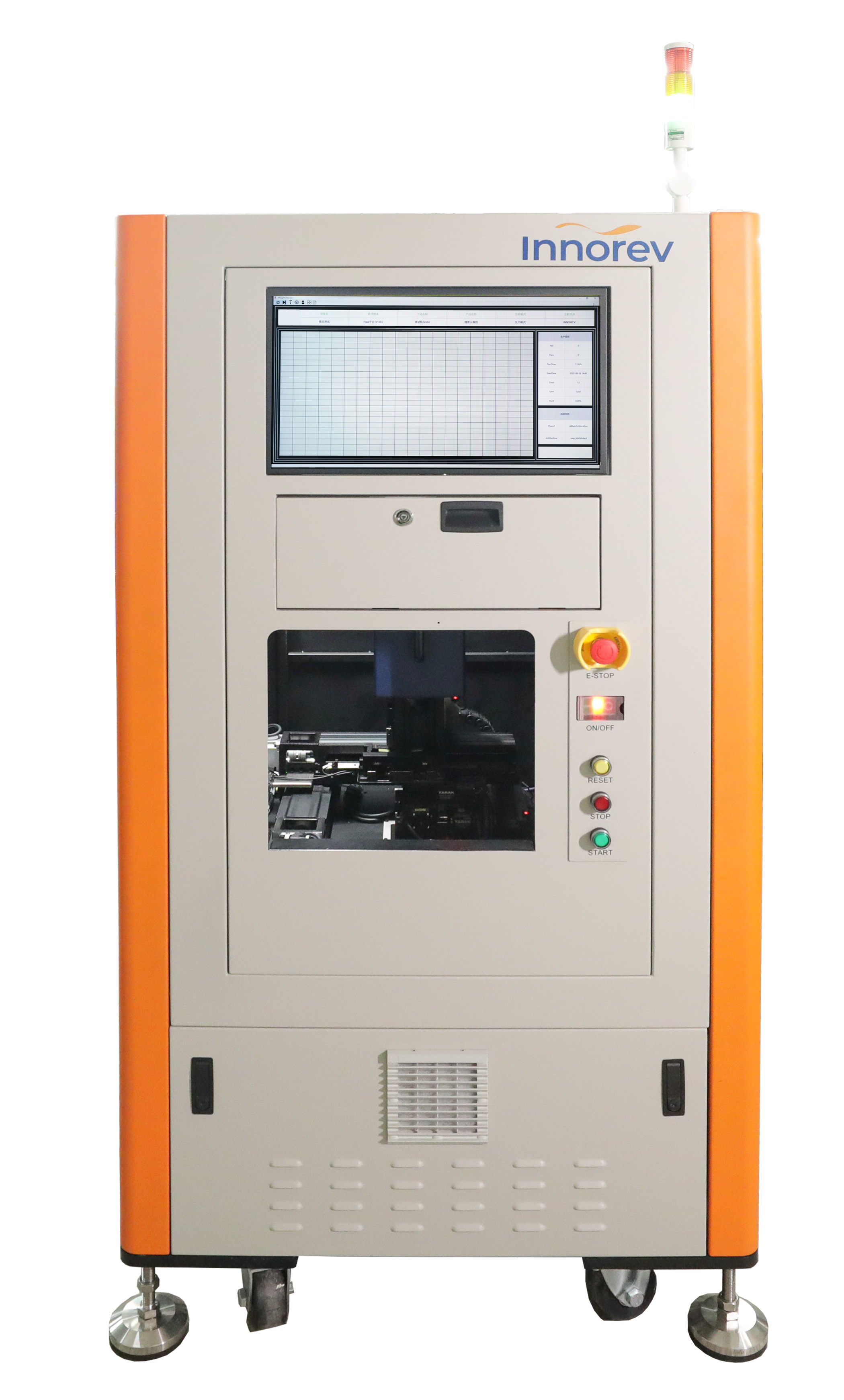
Innorev, a subsidiary of Colibri Technologies, has further integrated Near-Eye Display Image Quality Testing (NED IQT) into an automated platform. It is compatible with binocular testing from optical modules to complete devices. It also supports automatic loading and unloading. This extends lab-grade optical testing capabilities further to mass production lines.
From Testing to Active Alignment: Letting Data Participate in Manufacturing
After testing identifies issues, how to further improve imaging quality is another key step in XR mass production.
AA (Active Alignment) collects optical test results in real time. It drives a multi-degree-of-freedom platform to adjust component position and orientation. It finds the optimal imaging position. It then completes dispensing and curing.
Innorev combines optical testing, six-axis AA, high-precision vision, automatic alignment, and dispensing and curing. This extends test data from quality judgment to process control.
From Near-Eye Display to Full-Chain XR Testing
With near-eye display IQT at its core, Innorev's testing capabilities can extend further across the industry chain. This forms a testing and process system covering:
Micro Display IQT → Optical Waveguide DE Diffraction Efficiency → NED IQT → VID Virtual Image Distance → Optical Engine/Optical Module AA → Binocular IQT and AA → Complete Device Testing and Calibration
The capabilities presented in the report already cover multiple levels. These include instruments, testing platforms, process equipment, and automated production lines.
Its core is not simply adding more testing equipment. It is gradually connecting testing, AA, calibration, automation, and software data. This enables different manufacturing stages to form a traceable and feedback-driven quality closed loop.
From "Accurate Testing" to a "Manufacturing Closed Loop"
As XR enters large-scale mass production, the role of testing is changing. It is no longer merely a quality judgment at the end of the manufacturing process. It is becoming a key foundational capability. This capability connects optical performance, precision assembly and alignment, process optimization, and mass production yield.
Starting from near-eye display testing, this capability continues to extend to optical waveguides, optical engines, optical modules, binocular systems, and complete devices. Innorev is gradually building an integrated capability of "testing + AA + calibration + automation." This supports XR products in moving from R&D validation to stable mass production.